Thursday, 3 April 2014

Highclere Castle (Downton Abbey)

Highclere Castle is where Downton Abbey is set; the house is in Newbury.

I went for a quick visit with the family over christmas and got a few notes, pictures and leaflets from my visit.

The History of Highclere Castle

From some of the evidence around the Building there has been suggestions of the house being occupied over 1300 years. 

GEORGIAN/ VICTORIAN TIMES
Some rebuilding did begin within the late 18th/ 19th Century by the Carnarvon Family. It was changed to a classic Georgian house (mansion).
The structural work on the interior was completed by 1878 and the house became apart of political life within the victorian era. 

20TH CENTURY
The house during the 1st world war was actually used as a hospital, patients began appearing in september 1914. The countess of Carnarvon became adept Nurse and a skilled healer. 

However the house became a private home again within 1922. 

The house in world war 2 was used to home evacuee's getting away from the cities. 

Highclere Castle - picture 1

Highclere Castle - picture 2

highclere castle - Just a video I found on Youtube that shows the full outside of the Castle

tour of the real Downton Abbey - Lady of the house talking to the telegraph about the house and what Downton abbey uses each room for.

Reflection of Research

I thought that the best way to develop my work on the Downton Abbey side of things would be to go to the set. 
Highclere isn't to far from where i am from in Yorkshire so I thought I may as well go and see what I could find out. 
The house has many rooms full of artefacts that are seen on many occasions in the TV series.
There is also historical stories about the real family who lived there over the years and what the house has been used for.
I found this highly interesting and informative however I didn't have much time there and didn't get an awful lot of pictures.
I do feel this information helped me a little to understand what really went on in the house and I got to see what the producers have actually used out of the Castle's history.

Tuesday, 1 April 2014

Facts about the Titanic ( from the Titanic Belfast; Museum)

Some things I found out from my visit to the titanic Museum in Belfast.

Titanic - facts about the ship.


Ship Name - Titanic

Vessel Type - Passenger Ship

Official Ship - 131428

Builder - Harland and Wolff LTD. Queens Island, Belfast.

Yard Number: 401

Laid Down: 30th March 1909

Launched: 31st May 1911

Handed over: 2nd April 1912

Post and date of registry: Liverpool, 25th March 1912

Managing owner and address: Harold Arthur Sanderson, 30 James Street, Liverpool.

DISCRIPTION

Titanic plans - exhibition Titanic Belfast (created by naval architect Cecil Arthur Allen)
 - this was used in the enquiry into the loss of the titanic

White star offices where this was created.

Number of decks: 5 and 2 Partial

Number of Masts: 2

Rigged: Schooner

Stern: Elliptical

Build: Clencher

Framework and discription of vessel: Steel

Number of Bulkheads: 15

Number of Water ballast tanks: 17

DIMENSIONS

Length: 852.5 ft

Breadth: 92.5 ft

Depth: 64.9.1 ft

Gross registered tonnage: 46, 328, 57

MACHINERY

Engine Builder: 2x triple expansion inverted vertical direct acting surface condensing, 1 x low pressure turbine.

Cylinders: 2x 54; 2x 84; 4x 97 Inches

Stroke: 75 Inches

Nominal Horse power: 6,906

BOILERS

Description: Cylindrical Multi - tubular

Number: 24 double and 5 single ended

Iron or Steel: Steel

Pressure when loaded: 215 lb's

Screw: Triple

Speed: 21 Knots

Signal Letters: H.V.M.P.

NOTES

'Second of the 'Olympic' class, Yard No. 401 incorporated a number of design improvements and changes in the layout of the passenger accommodation following almost ten months operation of her older sister Olympic (Yard No. 400). The main difference between the two ships, externally, was the glassing in of the forward end of the Promenade Deck; in operation it was found that spray was landing on Olympic’s deck making it slippery for 1st Class passengers. Despite White Star’s concerns about the comfort of 1st and 2nd Class passengers this was not the primary reason for Titanic's construction. Her proper title is the 'Emigrant Ship Titanic' and without the record numbers of emigrants crossing the Atlantic ships like this would never have been constructed.
Time for the ‘Olympic’ class was running out long before an iceberg was sighted in Titanic’s path. The war clouds gathering across the Continent and, immediately after the Great War, restrictions on the numbers allowed to enter the United States, signaled the end of the giant emigrant ship era.
Titanic stands not only as one of the worst disasters at sea but also as a memorial to the zenith of mass migration across the world's oceans.' - from website and titanic museum.


----------------------------------------------------------x----------------------------------------------------------------


Who really designed the Titanic?

Alexander Carlisle - photograph from museum

Thomas Andrews did not design Titanic or her sister ships Olympic and Britannic. The man who deserves credit for the design is Alexander Carlisle.

He was born in Ballymena, Co. Antrim on the 8th July 1854. 

In 1870 Alexander Carlisle started work at Harland and Wolff, aged 16 as a premium apprentice.

In 1899 Carlisle was made chief naval architect at the yard and from this date her designed some of the most famous liners belonging to the white star line. 

At the end of June 1910 he resigned from the positions of General Manager and chairman of managing directors at the age of 55. 

After the disaster with the Titanic, Carlisle was said to be heart broken and had to go to the courts to give evidence about the design of the ship. 


Who Launched the Titanic?

Robert Keith - photograph from Museum

Robert Falconer Keith was the man who got to Launch the titanic. He was the Head Foreman Shipwright of Harland and Wolff; he joined the company in 1844.

Whilst working here he launched around 252 vessels - representing 2.5 Million gross tonnes.

There wasn't really a ceremony for any of the large white star line vessels.

this is a picture of Keith pushing the trigger and launching the titanic.

Keith and trigger for launch - Photograph from museum

The inquiry into the loss of the Titanic


Not only was the drawing above used in the enquiry of the Titanic, there were others used and newly drawn up to try understand what actually happened.

The inquiry lasted 36 days and cost a staggering 20, 549 pounds.. almost 1 million pounds in today money. 

Harland and Wolff were paid 574 pounds for the attendance of 3 witnesses at the inquiry.

After the inquiry the plans and charts used were given back to White Starline.  They were kept in case they were ever needed for investigation again however once the archive basement was cleared out in 1970's the plans were nearly lost as they were chucked out. It was by chance that Norman Kerr, a bookseller in the area who specialised in transportation related subjects saw them being thrown out. He spent a day digging them out of a skip.

inquiry plan drawing.

references:
Titanic museum in Belfast
http://www.titanicbelfast.com/Discover/Advert-Archive/1910s.aspx

Reflection of research

This page was dedicated to my trip to Belfast and my visit the Titanic Belfast Museum. I have used some of the information I found out from here on the different Titanic Pages but these were the bits I felt needed their own page dedicated to the museum.
It was very informative and helped me understand what happened to the Ship and why the ship was thought to be so grand.
Not only did explain the ship, it actually helped me understand a bit more about the social segregation as their were bits about the separation of the classes on the ship.
This made me realise that maybe when James Cameron directed the film 'Titanic' that he researched and also realised how bad the social class split was and decided there would be a great story to make out of it.

Monday, 31 March 2014

1910 - 1920 Public/ class and gender

I am researching social class over the decade i am studying as i have figured out from TV and film that it was a crucial part on society and even caused public divides.


Through the film 'The Titanic' and the TV series 'Downton Abbey' we see a lot of social divide between groups of people. Although the groups of people were in close quarters such as living on the same ship and in the same house for months/ years.

This made me think... what caused this issue? why did it change? was there any mixing of classes for any reason? etc.

'January 1910, J.A. Hobson indentified two England's: The North, a producer's England dominated by heavy industry and having a robust working class; The South, a consumer's England dominated by a rentier middle-class with a servile working-class.' - Waites, B A (1976). Journal of Contemporary History. 11th ed. London: Sage Publications. p27-48.


Obviously industry being built created a major divide between classes; The working class work for the Middle class who created the Industrial companies as they have enough money to do this. This is the same now however, back then work policies weren't fully in place - people didnt get compensation for illness/ inguries from work or get enough payment in general to work. This kept the working class within the working class. 

However recent studies have shown that within the decade 1910 - 1920 education became a lot more important to people. This meant young people did start breaking out of their working class background by being educated. - 'In 1910-11 there were 639,000 students who attended grant-aided establishments of further education (mainly evening classes/institutions) in England and Wales.' - Waites, B A (1976). Journal of Contemporary History. 11th ed. London: Sage Publications. p27-48.


Looking at other resources i have found that around world war 1 there were changes in poverty - it increased. 

there was 60% of working class families (with 3 children and unskilled) below Bowleys poverty line.
http://www.sussex.ac.uk/Units/PRU/wps/wp38.pdf

Not only was their a split between class, there was a split between Genders as well. Women were seen as less important and inferior to men. Women had no right to vote, had to marry into wealthy families to make money rather than earn it themselves and also had to make their husband happy. 

WOMENS HISTORY BETWEEN 1910 - 1920
1910 – 1920
1911 British writer, feminist and composer Ethel Smyth composes the
feminist anthem ‘March of the Women’ which is dedicated to Emmeline
Pankhurst. (www.pcsproud.org.uk)
1912 The ‘Cat and Mouse’ Act is enacted in Britain, allowing the government
to temporarily discharge women prisoners hunger striking for the vote –
until they were fit enough to be imprisoned again.
(Greater London Authority (2002) capitalwoman, GLA: London)
1913 A massive rally is held in Hyde Park for women’s right to vote, with
women travelling from all across the country.
(Greater London Authority (2002) capitalwoman, GLA: London)
1915 The first Women’s Institute in Britain is founded in North Wales at
Llanfairpwll. (www.bbc.co.uk)
Thousands of women march in Glasgow in response to the greedy rent
increases faced by women whose husbands were at war. Out of this
came the Rent Restriction Act which changed the housing system and
benefited poor people across the country. (www.gcal.ac.uk)
1916 Mary Barbour founds the Women’s Peace Crusade, an anti-war group
which sought to create links with a range of women concerned about
the war’s effect on families, homes and jobs. (www.gcal.ac.uk)
1918 Women over 30 are granted the right to vote in Britain.
(Greater London Authority (2002) capitalwoman, GLA: London)
The Parliamentary Qualification of Women Act is passed, enabling
women to stand as MP. (www.bbc.co.uk)
Constance Markiewicz becomes the first woman elected to
Westminster, representing Sinn Fein. She became involved in radical
politics through the suffragette and Irish national movement. She is
elected for constituency of Dublin St. Patrick’s as one of 73 Sinn Fein
MPs, but, following the line of Sinn Fein politics, declines the position
while in prison. (www.wikipedia.com)1920s
1920 The Sex Discrimination Removal Act allows women access to the legal
profession and accountancy.
(Greater London Authority (2002) capitalwoman, GLA: London)
http://www.mmu.ac.uk/equality-and-diversity/doc/gender-equality-timeline.pdf

OTHER RESOURCES

Reflection of Research

I decided that if i was going to narrow my research down to being directly about social segregation being shown through films and TV series based in 1910 and 1920 that I should look up some facts about social class within the decade. These facts helped push my research forward as they taught me what went on with social class at that time and how it should be shown in films. Luckily for 'Downton Abbey' and the 'Titanic' they kept the segregation very authentic and real to the actual ways of the decade.

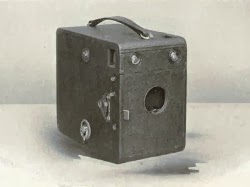
1900 - 1920 cameras

Camera 1900 - 1920

All the different types of cameras around the decade i am studying.

Box Cameras

Brownie, no1 Brownie - 1900

Brownie no. 0, 2, 2a, 2c and 3 - 1900

No. 3 Bull's-eye - 1900/1910

No. 1, 3a, 4 Panoram - 1900/1920

no. 2 stereo Kodak - 1900

no. 3B quick focus Kodak

Folding cameras

no. 3, 4 and 5 Cartridge Kodaks 1890/1900

original, no. 0, 1, 1a folding pocket Kodak 1890/1900

No. 2 stereo Brownie 1900

stereo kodak model 1 - 1900/1920

No. 2, 2a, 3, 3a folding (pocket) Brownie - 1900/1910

No.1a Speed kodak - 1900/1910

No.4a speed kodak - 1900/1910

No.4 screen focus Kodak - 1900

No. 3, 4 and 5 eastman plate camera - 1900

vest pocket kodak - 1910

Reflection of research

I decided to do this page as a bit of fun as I am a camera fanatic. I thought it may be interesting to see how cameras looked in the 1910's and 20's. Even though this doesn't affect my final idea of social segregation it would help if I was to produce a film about the decade as these would be useful props.


World War 1 ( how it began and some facts)

World War 1
The facts.
WEBSITE 1

  • When did world war 1 begin and end?

World War 1 began on July 28, 1914 and lasted until November 11, 1918. 


  • What was the reason for WW1 to begin?

Differences in foreign policies were to blame, although the immediate cause was the assassination of Austria’s Archduke Ferdinand.


  • Who was involved in WW1?
The two main sides were the Allies, which included France, Great Britain and Russia; and Germany and Austria-Hungary. In total, 30 countries were involved in the conflict. Italy, once part of the Triple Alliance with Germany and Austria-Hungary, fought on the side of the Allies.

  • what did the soldiers fight in?
Soldiers fought largely in trenches during the war, and thousands suffered from stress, known as shell-shock.  

  • what were they like?

The British and French trenches were often squalid, whereas the German trenches were almost luxurious in comparison, with bunks and decent cooking facilities.

  • What animal was used to send messages?
dogs were used to carry messages in capsules attached to their body. Dogs also carried and placed telegraph wires in important areas.

  • What other animals were used?
Pigeons were also used during the war. About 500,000 pigeons were regularly dropped into enemy lines by parachute, and then sent back with messages.

  • what happened when it was christmas in the trenches?
On Christmas Eve, 1914, both sides declared an unofficial truce and sung christmas carols to each other. A football match was played in no-man’s land (the area between the German and British) trenches, and German and British soldiers exchanged food and souvenirs.The following Christmas, sentries on both sides had orders to shoot any soldier who did this.

  • what did the guns and artillery sound like?
Cannons and artillery were often extremely loud. In 1917, the explosives used to destroy a bridge in France could be be heard over 130 miles away in London.

  • were the weapons old or new?
Many new weapons were invented or first used during World War 1. Big Bertha was one of the most famous; it was a 48 ton gun capable of firing a shell over 9 miles. It took 200 men several hours to assemble the gun.

  • why did they call there artillery trucks 'Tanks'?
Tanks were so called because of early attempts to disguise them as water tanks. They were also known as male and female tanks; male tanks had cannons and female tanks had machine guns.

REFERENCE  - http://primaryfacts.com/1645/world-war-1-facts-and-information/

WEBSITE 2

  • Germans were the first to use flamethrowers in WWI. Their flamethrowers could fire jets of flame as far as 130 feet (40 m).c

  • More than 65 million men from 30 countries fought in WWI. Nearly 10 million died. The Allies (The Entente Powers) lost about 6 million soldiers. The Central Powers lost about 4 million.f

  • There were over 35 million civilian and soldier casualties in WWI. Over 15 million died and 20 million were wounded.f

  • Nearly 2/3 of military deaths in WWI were in battle. In previous conflicts, most deaths were due to disease.a

  • During WWI, the Spanish flu caused about 1/3 of total military deaths.b

  • Russia mobilized 12 million troops during WWI, making it the largest army in the war. More than 3/4 were killed, wounded, or went missing in action.

  • In August 1914, German troops shot and killed 150 civilians at Aerschot. The killing was part of war policy known as Schrecklichkeit (“frightfulness”). Its purpose was to terrify civilians in occupied areas so that they would not rebel.b

  • During WWI, British tanks were initially categorized into “males” and “females.” Male tanks had cannons, while females had heavy machine guns.h

  • “Little Willie” was the first prototype tank in WWI. Built in 1915, it carried a crew of three and could travel as fast as 3 mph (4.8 km/h).c

  • Artillery barrage and mines created immense noise. In 1917, explosives blowing up beneath the German lines on Messines Ridge at Ypres in Belgium could be heard in London 140 miles (220 km) away.c

  • The Pool of Peace is a 40-ft (12-m) deep lake near Messines, Belgium. It fills a crater made in 1917 when the British detonated a mine containing 45 tons of explosives.a

  • Big Bertha was a 48-ton howitzer used by the Germans in WWI. It was named after the wife of its designer Gustav Krupp. It could fire a 2,050-lb (930-kg) shell a distance of 9.3 miles (15 km). However, it took a crew of 200 men six hours or more to assemble. Germany had 13 of these huge guns or “wonder weapons.”c

  • Tanks were initially called “landships.” However, in an attempt to disguise them as water storage tanks rather than as weapons, the British decided to code name them “tanks.”c

  • The most successful fighter of the entire war was Rittmeister von Richthofen (1892-1918). He shot down 80 planes, more than any other WWI pilot. He died after being shot down near Amiens. France's René Fonck (1894-1953) was the Allies’ most successful fighter pilot, shooting down 75 enemy planes.c

  • Margaretha Zelle (1876-1917), also known as Mata Hari, was a Dutch exotic dancer accused of being a double agent. Though she always denied being a spy, the French executed her in 1917.h

  • French Second Lieutenant Alfred Joubaire wrote in his diary about WWI just before he died that “Humanity is mad! It must be mad to do what it is doing. What a massacre. What scenes of horror and carnage! I cannot find words to translate my impressions. Hell cannot be so terrible! Men are mad!”b

  • Some Americans disagreed with the United States’ initial refusal to enter WWI and so they joined the French Foreign Legion or the British or Canadian army. A group of U.S. pilots formed the Lafayette Escadrille, which was part of the French air force and became one of the top fighting units on the Western Front.g

  • In early 1917, British cryptographers deciphered a telegram from German Foreign Secretary Arthur Zimmermann to Germany's minister in Mexico. The telegraph encouraged Mexico to invade U.S. territory. The British kept it a secret from the U.S. for more than a month. They wanted to show it to the U.S. at the right time to help draw the U.S into the war on their side.d

  • Woodrow Wilson’s campaign slogan for his second term was “He kept us out of war.“ About a month after he took office, the United States declared war on Germany on April 6th 1917.d

  • To increase the size of the U.S. Army during WWI, Congress passed the Selective Service Act, which was also known as the conscription or draft, in May 1917. By the end of the war, 2.7 million men were drafted. Another 1.3 million volunteered.a
More on the website!
REFERENCE
 - http://facts.randomhistory.com/world-war-i-facts.html
 - Paul Fussell (1975). The Great War and Modern Memory. New York: Oxford University Press. p191-270.
 - John H. Morrow JR. (2004). The Great War: An Imperial History. Oxon: Routledge . p1-40.

Reflection of research

I decided to do a bit on world war 1 because it was a major event within the decade I was studying. I didn't get too many facts because i decided to do start researching social segregation in 1910 -1920 and how films used it within their story lines. However as it was apart of one of 'Downton Abbey's' story lines this was very useful in understanding who went to war and what is was all for. I feel I could have done more on this page but my main focus pages were the 'Titanic' and 'Downton Abbey' pages. 

Wednesday, 26 February 2014

World war 1 museums and archives.

I am listing all the places i have been to over the last few weeks that have really helped me understand the world war a lot more.
This includes pictures and information i have gathered from them to understand the decade. 

  • Liddle Collection, Leeds

The Liddle Collection was founded to collect and preserve individual experiences of the First World War. There are letters, diaries, personal papers, photographs, newspapers, artwork and tape-recordings.
The 1914-1918 catalogue can be viewed online.
Visitors who are not a member of the University of Leeds should make an appointment before making a visit to the Liddle Collection.
Opening hours: Contact the Liddle Collection to confirm opening hours.
Admission free.
Address: Special Collections, Leeds University Library, Woodhouse Lane, Leeds, West Yorkshire LS2 9JT
Website: (Liddle Collection) www.leeds.ac.uk
Telephone: 0113 34 35518 or 0113 34 36383

website the information came from - http://www.greatwar.co.uk/places/uk-ww1-museums.htm

  • The Somme Heritage Centre

    The Somme Heritage Centre was opened in 1994. It is a museum with a collection of First and, since 2000, Second World War artefacts. Exhibitions and displays aim to provide a cross-community educational facility to commeorate the part played by almost a quarter of a million Irish men and women in the First World War.
    The three volunteer divisions raised during the First World War were in action in some of the bloodiest battles and this museum tells the story of the men in the 10th and 16th (Irish) Divisions and the 36th (Ulster) Division.
    Facilities: Guided tours; audio-visual displays; conference facilities; shop.
    Open: April-June, September: Monday-Thursday 10.00 - 16.00; Saturday 12.00 - 16.00; July & August: Monday-Friday 10.00 - 17.00; Saturday & Sunday 15.00 - 17.00; October-March: Monday-Thursday 10.00 - 16.00; First Saturday of each month 12.00 - 16.00
    Admission charge. Concession and group rates available.
    Address: Somme Heritage Centre, 233 Bangor Road, Newtownards, County Down BT23 7PH, Northern Ireland
    Telephone: (028) 9182 3202
    Fax: (028) 9182 3214

    website the information came from - http://www.greatwar.co.uk/places/uk-ww1-museums.html


Reflection of Research

Though I did go and look in these museums, I didn't get much information that was useful towards my social segregation idea. However reflecting back I wish I did pay a bit more attention to these places as maybe some of it could have helped and I just didn't Realise. 

Monday, 24 February 2014

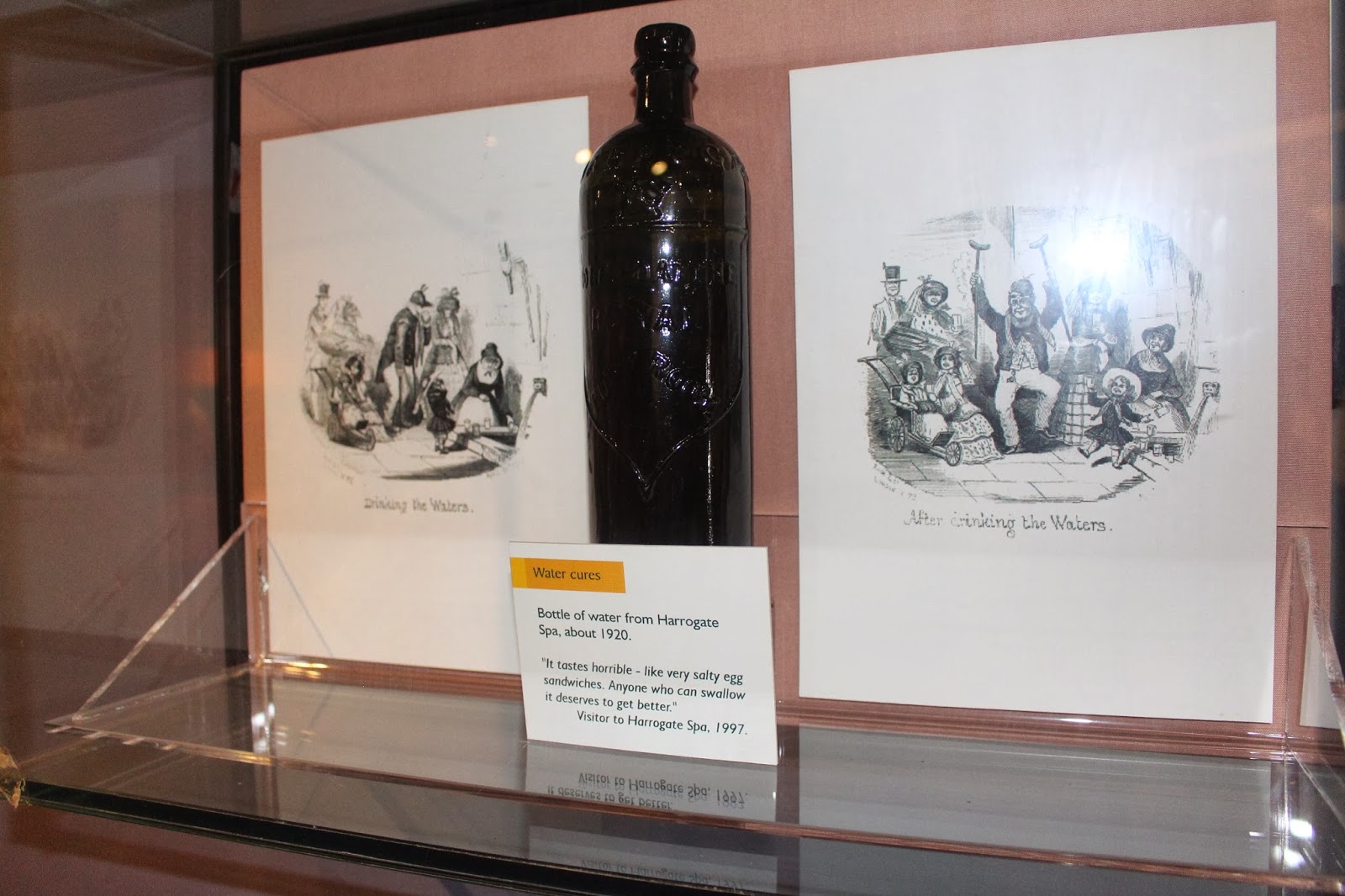
Medicine/health in 1910 - 1920 (with help from the Thackray Museum, Leeds)

This page is all about how the public/ society in England lived before the 1910's and what happened afterwards. This includes health, medicine, surgery and what their living areas are actually like. 

Discoveries and events that happened before 1910 in Medicine

  • 1847 - discovery of a new way to make people during surgical operations.  

  • 1854 - Work on bad wine helped show that germs caused decay and disease.

  • 1889 - William S Halsted introduced rubber gloves to surgery - Which Protected Patients from germs. But his original idea was to protect his Fiancés delicate hands.

  • 1890's - Scientists found that mosquitos could carry the parasites/ germs causing Malaria and Yellow Fever.

FLORENCE NIGHTINGALE
 my own image - 27th December 2013

 my own image - 27th December 2013

REFERENCE - With Help from the Thackray Museum, Leeds

what was it like in the 19th century - living and illness wise
(a lot of this is based on Leeds area)

Illness
  • Leeds Waterworks Company took a very long time to supply clean water to the yards and alleyways off kirkgate a Briggate - cholera therefore was a big problem causing people to have symptoms such as sever watery diarrhoea and vomiting. There were four great national epidemics in Victorian Britain 1831 - 1832, 1848 - 1849, 1854 - 1855 and in 1866. Cholera caused victims to die within hours as they lost water from the body and was passed on through the infected water and even food. 

  • Typhoid fever was also passed on through infected water and food just like cholera, it also was a major killer in the 19th century however the symptoms were different. The symptoms were fever, headache and diarrhoea.

  • Tuberculosis (TB) - there were many symptoms of Tuberculosis including coughing, shortness of breath, fever, weakness and weight loss. This illness was a major killer, causing 16% of all deaths/ 1 in 6 deaths in the 1850's and it was passed on by coughing and sneezing. 'the captain of all these men of deaths' John Bunyan, the life and death of Mr Badman (1680).  

  • Diphtheria - the symptoms of this disease were sore throat and fever and a membrane growing across the throat which made breathing very difficult. This illness like many at the time was a major killer but became a serious threat after 1855 within England, causing hundreds of deaths. It was passed on by coughing, sneezing and also through infected milk. 

  • Smallpox - Symptoms were puss filled blisters all over the body and fever. this disease resulted in a high death rate in victorian Britain ( up to 20% of all cases) however it also scarred survivors for life. this was passed on through coughs, sneezes and touch. 

  • Measles - there were a few different symptoms when someone had measles, this included a red body rash, a fever and a sore throat/cough. This was a major killer in Victorian Britain occurring frequent national epidemics. It was passed on by people coughing and sneezing. 
how society thought they could cure it in 19th century.
my own image - 27th December 2013
  • Whooping cough - symptoms included violent coughing, vomiting and fever. This was a major killer which hit the under 5's the hardest. It was passed on by coughing and sneezing. 

  • Influenza (flu) - symtoms of influenza included fever and chills, weakness all over and headache/ muscle aches. It was a major killer of the older generation and occurred in frequent national epidemics. it was passed on through coughs and sneezes.
how society thought they could cure it in 19th Century.
my own image - 27th December 2013

Many of these diseases were caused by the poor standard of living, there were no sewers so dirt and waste would run down the streets, there wasn't much clean water so the water being drank had infectious diseases and germs in it. There wasn't much knowledge of different germs and what they could cause and how to treat many of the illnesses. 
However, By the end of the 19th century a lot was starting to change...

REFERENCE - with help from the Thackray Museum, Leeds

How it looked in the 19th century on the English streets (picture done by me of the Thackray Museuem)

The little Pub/bar
my own image - 27th December 2013

outside the farm house; street
my own image - 27th December 2013

Within the farm house
my own image - 27th December 2013

within the farm house 2
my own image - 27th December 2013

Beds in house
my own image - 27th December 2013

beds in house 2
my own image - 27th December 2013

Butchers Yard
my own image - 27th December 2013

muck station, next to butchers yard
my own image - 27th December 2013

 street view
my own image - 27th December 2013

vicar praying for ill in house
my own image - 27th December 2013

Factory worker been hurt working
my own image - 27th December 2013

Changes towards the end of the 19th Century

  • They were supplied with clean drinking water from the mains.
my own image - 27th December 2013

my own image - 27th December 2013
  • the standard of living by the end of the 19th century changed as most of the working class enjoyed a better standard of living however still over a quarter lived in poverty.

  • (mainly a Leeds fact) Leeds housing improved by an Act of 1866, back to backs had to be built in blocks but no more than 8 were allowed together. 

Hospitals

Hospitals became important centres of medical care in the late 1800's. New developments in healthcare along with greater affluence increased the demand for medical products, and growing industrialisation meant that firms were able to supply them.

In the 1920's hospitals were seen as the centres for modern medicine. Patients were cared for in clean and highly functional wards. Nurses had to be Nationally trained and registered to work, this meant that hospitals became efficient and effective places for treatment. Hospital death rates in 1920 fell to a fraction of their mid 19th Century levels.

Hospital ward 1920 Leeds
 my own image - 27th December 2013

An old medicine case 1908
 my own image - 27th December 2013

this was used to cure illness in 19th century
my own image - 27th December 2013 

medicine by Lobelline around late 19th Century/ early 20th Century
my own image - 27th December 2013

information about above photograph
my own image - 27th December 2013

medicine from the late 19th/ early 20th century
 my own image - 27th December 2013

Advances in Medicine
my own image - 27th December 2013

chairmen of Leeds Public Dispensary - honourary Physician/Surgeon 
my own image - 27th December 2013

The ones between 1910- 1920
 my own image - 27th December 2013

Vaccine discoveries with dates!
my own image - 27th December 2013

 Medical Case storing treatment for Syphilis 1920
my own image - 27th December 2013

Paul Ehrlich - his discovery 1909

Paul Ehrlich (1899) was a German scientist who studying the dyes used to stain Bacteria for viewing under microscopes. He knew that some Dyes were absorbed by bacteria, but not by human cells. He needed to find a dye that could also poison bacteria.
In 1909 after many years and experiments his team finally found a dye that killed Syphilis germs - 'Salvarsan' or '606', a Magic Bullet against disease.

medical case storing treatment for Syphilis (2)
my own image - 27th December 2013

about the photographs above!
my own image - 27th December 2013

REFERENCE - With help from the Thackray Museum, Leeds

TB in the 20th Century

photograph from exhibition at thackray museum
my own image - 27th December 2013

photograph from exhibition at thackray museum
 my own image - 27th December 2013

TB Drug treatments; medicine
my own image - 27th December 2013 

Milk Bottles 
my own image - 27th December 2013

how to prevent TB in 20th century
my own image - 27th December 2013

Spittoon 
 my own image - 27th December 2013

exhibition at the Thackray Museum
my own image - 27th December 2013 

exhibition at the Thackray Museum
my own image - 27th December 2013

REFERENCE - With help from the Thackray Museum, Leeds

Polio

In England polio was around a while however, in the 1940's to 50's there was a wide spread polio breakout - affecting many including children with paralysis and even death. 

In 1910 Dr Karl Landsteiner found that polio was a virus-borne infection.

Jonas Salk (1914) University of pittsburgh discovered the first polio vaccine in 1955.

REFERENCE - with help from the Thackray museum, Leeds and book - The first polio vaccine 

Polio Machine - Negative Pressure Ventilator 
my own image - 27th December 2013

Jonas Salk - Vaccine
my own image - 27th December 2013

President Roosevelt with Polio
my own image 27th December 2013

Anaesthetic around 1910 - 1920

A few Anaesthetic bottles 1900
 my own image - 27th December 2013

Chloroform 1920 - 1950
  my own image - 27th December 2013

chloroform inhaler
  my own image - 27th December 2013

chloroform drop bottle 1890
  my own image - 27th December 2013

Anaesthetic Machine 
  my own image - 27th December 2013

information about Anaesthetic Machine
 my own image - 27th December 2013

SCRUB UP!

Antiseptics and disinfectant bottles
  my own image - 27th December 2013

information about above
  my own image - 27th December 2013

steriliser drum
  my own image - 27th December 2013

information about above
 my own image - 27th December 2013

REFERENCE - With help from Thackray Medical Museum, Leeds

Surgery 1900's

By 1900's surgeons were performing operations successfully on areas of the body that were once thought to be untouchable - the Brain, The abdomen and deep inside the chest.

Xrays/ radiation were being used as treatments around the 1920's. 

Operation
my own image - 27th December 2013

tools for operating
my own image - 27th December 2013 

more tools for operating
 my own image - 27th December 2013

microscope
 my own image - 27th December 2013

information about above
 my own image - 27th December 2013

sisters register of patients 1914
 my own image - 27th December 2013

 Labatory Leeds General infirmary. 
my own image - 27th December 2013

xray machine 1920
my own image - 27th December 2013

Reflection of research

This is one of the best pages on my blog. The information I got from this museum was fantastic and a very useful insight into the medical side of 1910 to 1920. Unfortunately not a lot of it could be used towards my final page (representation of social class in 'Titanic' and 'Downton Abbey') I wouldn't say it was completely useless as if i was going to produce a film to do with this decade, I would need to know about the problems that could be encountered, especially to someones health.